
Hospice care teams use custom songs to turn a person’s memories, relationships, and words into a musical tribute, with the aim of honoring that person and giving loved ones something personal to share. Choosing custom songs for hospice care teams starts with the person’s wishes, not a ceremony, a deadline, or an assumption that everyone wants music.
The short version
- FreeCustomSong creates personal tributes with custom lyrics, music, and vocals, not clinical music therapy.
- Choose custom songs for hospice care teams around the person’s wishes, family memories, and intended listening setting.
- Compare a custom song with a familiar recording, a family performance, or a spoken tribute.
- Confirm timing, preview access, and sharing permissions before planning a bedside presentation.
Why Personal Songs Matter for Hospice Care Teams
A song can give you a way to say something specific: thank you for raising us, we remember your kindness, or this ordinary afternoon meant everything. It does not need to summarize a whole life. Sometimes the right subject is the garden someone tended or the nickname only their grandchildren use.
At FreeCustomSong, we create personalized songs with custom lyrics, music, and vocals. Our custom songs are best for families who want their own memories expressed in a musical tribute. They are personal gifts, not a substitute for clinical care or music therapy.
Hospice introduces a particular buying decision: the person receiving the song, the relative arranging it, and the person playing it might be different people. Before choosing a service, agree on who the song is for and whether it will be heard privately, shared with family, or saved for later.
Choose the listening experience before choosing the song service. A beautiful tribute is not the right gift if its recipient does not want to hear it.
How to Choose a Custom Song for Someone in Hospice
1. Establish whose wishes guide the gift
Start with a conversation, not an order form. Ask the person whether they would enjoy a song about their life or relationships, if that conversation is possible and appropriate. Give them room to decline without needing to protect anyone’s feelings.
If the song is intended for relatives rather than the person receiving hospice care, say so clearly. A family keepsake and a bedside gift need different words. Neither has to become a farewell unless that is what the people involved want.
Choose 1 family contact to gather preferences and communicate decisions. That person should coordinate contributions, not speak over the recipient or decide what everyone ought to feel.
- Ask who should receive the song first.
- Agree on whether a bedside presentation is wanted.
- Record subjects the person does not want included.
- Separate family preferences from the recipient’s wishes.
2. Compare the tribute formats before choosing a service
The simplest route is to choose a familiar recording, sing something together, or read a short tribute aloud. None requires commissioning new music. These options deserve consideration when the person already has a song they love or would rather hear a familiar voice.
A personalized song serves a different purpose: it puts the family’s own details into lyrics and music. Choose that route when the story itself matters more than hearing a particular existing recording. At this stage, compare what you want someone to hear, not how elaborate the gift looks.
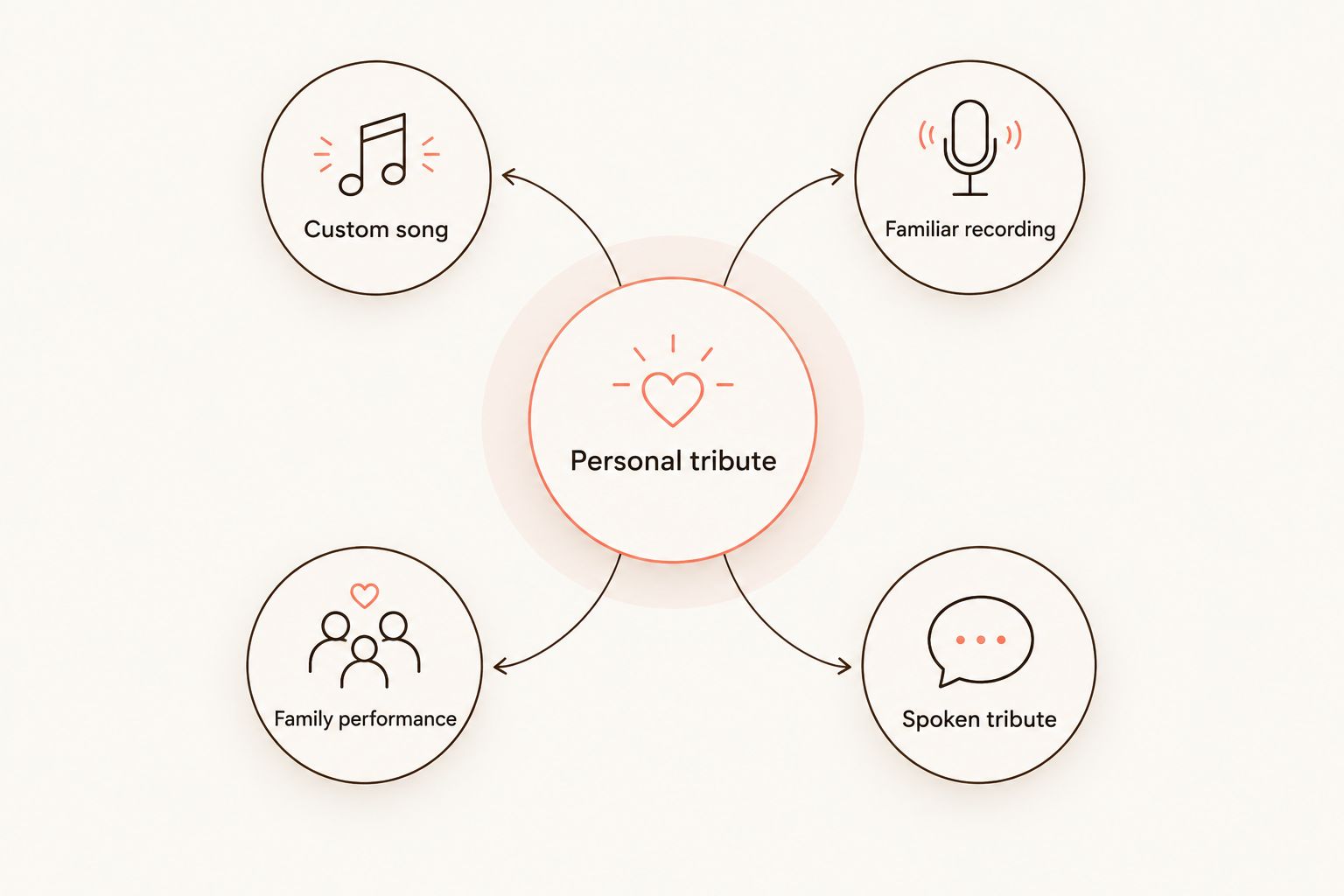
Use the format comparison below to narrow your choice. Keep a simple alternative ready if the intended listener changes their mind.
- Choose a familiar recording for a song already loved.
- Choose a family performance when the familiar voice matters most.
- Choose a spoken tribute when music is not wanted.
- Choose a custom song when personal lyrics are central.
3. Match the service to the kind of song you need
Before commissioning anything, write a plain description of the gift: a daughter thanking her father, siblings remembering their mother’s humor, or a spouse celebrating ordinary years together. That sentence gives you a better selection criterion than a promise of an emotional reaction.
FreeCustomSong creates personalized songs for honoring loved ones, including love, worship, and memorial songs. You can bring us the memories you want expressed through custom lyrics, music, and vocals. Choose the subject around the relationship, not simply around the hospice setting.
A new song is not a familiar recording or a relative’s own voice. If either of those is essential, keep it as part of the gift rather than expecting a custom song to replace it.
- Decide whether the message is gratitude, remembrance, love, or worship.
- Choose a musical direction the recipient enjoys.
- Ask what the finished song includes.
- Check delivery and revision terms before committing to a presentation.
4. Prepare a brief that sounds like the person
You can begin with a shared note or a conversation with a relative. Gather 3 specific memories before attempting a life story. A kitchen ritual, a favorite saying, and a place that mattered offer more direction than a long list of flattering adjectives.
Distinguish facts from wishes. Someone’s love of gardening is a usable detail; an assumption about what they believe happens after death is not. Include religious language only when it reflects the person and the intended listeners.
An illustrative brief might describe a parent who always saved the corner brownie and called every Sunday. Those details are examples, not a customer story. Your own small details are what make the tribute personal.
- Include names with pronunciation guidance.
- Describe concrete memories rather than broad praise.
- State words or themes to avoid.
- Leave out medical records and unnecessary health details.
- Identify any family contribution that needs permission to use.
5. Check the words and delivery before scheduling a moment
Ask about preview access and revision terms before ordering, rather than assuming every service handles them the same way. A misspelled name and an emotionally unsuitable lyric are different problems, but both deserve attention before a family gathering.
Our guide to previewing a personalized song before it is finalized covers that buying question. For a hospice tribute, also check whether the lyrics speak to the person or about them. Past-tense wording can change the meaning of a song intended for someone who is still living.
Optional rush delivery exists with our service. Confirm the current arrangements before building a time-sensitive bedside visit around a new song, and keep a familiar recording or spoken message ready instead.
- Confirm name pronunciation and relationship details.
- Check the emotional meaning of the lyrics.
- Ask how previews and changes are handled.
- Confirm delivery against the intended occasion.
- Avoid announcing a presentation before the song is ready.
6. Plan a private, optional first listen
Start simply: a private listen with someone the recipient trusts, without an audience waiting for a reaction. Ask the hospice team about the listening setting and any care-related considerations. Let the person choose whether to listen, pause, or stop.
The first play does not need to become an event. You can offer the song and leave space for whatever follows, including silence, a change of subject, or no response. Do not treat tears, smiles, or an audible reaction as proof that the gift worked.
Decide separately whether relatives can keep or share it. Permission for a private gift is not permission to post a bedside recording publicly.
- Offer listening rather than announcing a surprise performance.
- Keep the volume adjustable and the stop control close.
- Ask before recording anyone’s reaction.
- Agree on who can receive the song afterward.
- Keep public sharing separate from private family use.
Compare the Options for a Hospice Tribute
The right format depends on what you want to preserve: a familiar melody, a loved voice, personal words, or a new song. These are alternatives, not a ladder from a modest gift to a better one.
| Option | Best for | What it contributes | Key limitation |
|---|---|---|---|
| Custom song | Families who want personal memories set to music | Lyrics, music, and vocals built around a personal tribute | It is a new song, not an existing favorite or a relative’s voice |
| Familiar recording | Someone who already has a meaningful song | The recording and musical memories the person already knows | Its lyrics are not written around the family’s story |
| Family performance | Someone who wants to hear a loved one sing | A recognizable voice and a direct personal gesture | The singer must feel comfortable performing, and the listener must want it |
| Spoken tribute | Someone who prefers words without music | A letter, memory, or message read in a familiar voice | It does not provide a musical keepsake |
You can also combine formats without turning the occasion into a program. Read a short letter before sharing a song privately, or save the song for relatives who want to hear it later. Let the person’s preferences determine what belongs in the room.
What to check when comparing custom song services
Ask each provider the same practical questions so you can compare the actual offer. Does the song include personalized lyrics, music, and vocals? Can you specify unwanted themes? What happens if a name is pronounced incorrectly? When is the finished song expected, and what changes are included?
Keep the distinction between a creative preference and a service term clear. Wanting a gentle song is a preference to explain in your brief. Needing a finished file before a family visit is a requirement to confirm before ordering.
With FreeCustomSong, the complete core song is free, and optional paid extras exist. Choose any extra because it addresses a real need, not because the occasion makes you feel obliged to add more. A deeply personal gift does not need every optional feature.
Common Mistakes Hospice Care Teams and Families Make
Making the song a surprise by default
A surprise puts the listener in a situation they did not choose. Ask whether a personal song would be welcome, and offer a private listen instead of gathering relatives around a device. The invitation should include an easy way to say no.
Writing a memorial before the person wants one
Hospice care does not tell you what someone wants their song to say. Avoid automatically writing in the past tense, describing a final goodbye, or using language about heaven. Ask whether the message should celebrate the present, express gratitude, or serve as a keepsake for later.
Asking the whole family to approve every line
Collecting everyone’s memories can enrich a brief; requiring everyone to rewrite it can erase its focus. Use 1 coordinating contact and identify whose wishes guide the song. Resolve disagreements about sensitive material before sending it to a provider.
Treating a personal gift as a clinical intervention
Do not promise that a custom song will ease symptoms, resolve grief, or create a particular emotional response. Keep its purpose clear: it is a personal tribute. Bring questions about therapeutic music support to the hospice care team rather than expecting a song service to provide clinical care.
Sharing the moment before asking permission
A song can be meaningful without becoming a social media post. Ask separately about sharing the audio, the lyrics, and any recording of the person listening. If preferences differ, keep the first experience private and decide about wider sharing later.
FAQ
What's the best custom song for someone receiving hospice care?
The best choice is a song the person wants, built around their relationships, memories, and musical preferences. Start by asking whether a new personal song is welcome or whether they would rather hear a familiar recording or voice.
Can a hospice care team arrange a personalized song for a family?
A hospice care team can help a family consider a personalized tribute, with the person's wishes guiding the decision. Agree on who will provide memories, approve the brief, and decide how the song is shared.
Is a custom song the same as music therapy?
No, a personalized gift song is not clinical music therapy. Ask the hospice care team about therapeutic music support if that is what the person or family needs.
Does a hospice song have to be about saying goodbye?
No, a hospice song can celebrate love, gratitude, humor, faith, or ordinary memories. Do not use farewell language unless it fits the person's wishes and the song's intended purpose.
Can we include prayers or worship themes?
Yes, you can request a worship song through our service. Choose faith language that reflects the person being honored rather than assuming everyone shares the same beliefs.
Can we get a song before a time-sensitive visit?
Confirm delivery arrangements before planning the visit around a new song. Optional rush delivery exists, but keep a familiar recording or a spoken message ready if timing is essential.
Do we have to share the song publicly?
No, you can choose to keep the gift within the intended listening group. Ask permission separately before posting the song or recording someone's response.
One Last Thing
Do not edit out the ordinary detail. The phrase someone says when answering the phone, the chair they always choose, or their insistence on feeding everyone can say more than a grand description of their life.
You do not need to make the story sound impressive. If you would like us to turn those memories into a song, start with the person you love and what you want them to hear.
Create a song for someone you love
Bring the memories, phrases, and small details you want expressed through lyrics, music, and vocals.