
Yes, a duet style personalized song can feature 2 voices taking turns, singing together, or combining both approaches. The important distinction is whether you want two characters telling the story, two distinct vocal sounds, or harmony behind one lead singer. Before choosing a service, confirm that it supports the arrangement you want, because custom lyrics and vocals do not automatically include a duet.
The short version
- A duet style personalized song can use alternating voices, shared lines, or both.
- Two singers and two storytelling perspectives are different choices. Explain which matters to your gift.
- FreeCustomSong creates personalized songs with custom lyrics, music, and vocals for celebrating or honoring someone you love.
- Confirm duet support, voice choices, and how each part is assigned before committing to a service.
Can a Personalized Song Be Sung in More Than One Voice or Duet Style?
Yes. A personalized song can be arranged for multiple vocal parts, but a duet is an arrangement choice, not an automatic feature of personalization. Describe what the voices should do rather than relying on the word duet alone.
For example, one voice might tell the story of meeting your partner, while another answers with their side. Alternatively, both voices might address the same person, as siblings thanking a parent. These are different ways to tell a story, even though both involve two voices.
At FreeCustomSong, we create personalized songs with custom lyrics, music, and vocals to celebrate or honor someone you love. If a specific vocal arrangement is essential to your gift, make that requirement clear before proceeding.
| Vocal arrangement | Best for | What it adds | What to watch for |
|---|---|---|---|
| Alternating duet | Two people with different perspectives | Each voice gets its own lines or sections | Unclear speaker changes can make the lyrics confusing |
| Shared duet | A message both people want to express | Both voices sing the same words together | The individual stories receive less space |
| Lead with harmony | One person's message with vocal support | Supporting notes add another vocal layer | Harmony does not give the second voice its own story |
| Group-style vocals | A family or group speaking collectively | A shared message from several people | Individual names and memories need careful placement |
The right choice depends on whose message the recipient should hear, not simply how many voices sound impressive.
Why the Voice Arrangement Matters to Your Gift
A song from you to your husband says something different from a song that speaks for both of you. Neither approach is automatically more meaningful. Choose the one that matches the gift you actually want to give.
If the song is a surprise, writing only from your perspective avoids putting unfamiliar thoughts into someone else's mouth. A shared perspective works better when you already know the words, memories, or promises both people would recognize.
Before you compare vocal styles, finish this sentence: When they hear this, I want them to understand... That answer gives the arrangement a purpose. Without it, a second voice can become decoration rather than part of the story.
Alternating Voices: Best for Two Sides of the Same Story
An alternating duet gives each voice separate lines, verses, or sections. This is a useful choice when the contrast between the speakers matters, such as two partners remembering their first meeting differently.
Give each part a clear identity. One person might describe the nervous introduction; the other might remember the joke that broke the tension. The shared chorus can then bring those separate memories together.
Keep the speaker changes easy to follow. If both parts use I and you without enough context, the listener has to work out who is speaking instead of enjoying the song.
A practical brief identifies:
- Who each voice represents.
- Which memories belong to each speaker.
- What each person wants to say.
- Where the voices should come together.
Avoid assigning feelings to the recipient simply because they would rhyme nicely. Use things they have actually said, shared memories, or a clearly imagined storytelling frame that will not be mistaken for their own words.
Shared Vocals: Best for a Message You Both Mean
Shared vocals put both voices on the same words. This suits a joint thank-you, a family dedication, or a promise that belongs equally to both speakers.
The advantage is clarity: the listener hears a collective message. The trade-off is that each person's individual experience gets less attention, especially if the entire song uses the same shared perspective.
For a gift to Mom, for instance, siblings might contribute separate memories but sing the central thank-you together. That gives the song room for individual details without losing the feeling of a gift from everyone.
Use we only where it is true. If one sibling remembers a particular childhood moment and another was not there, keep that memory in the appropriate individual part rather than rewriting it as a shared experience.
Lead With Harmony: Best for One Clear Personal Message
Harmony supports the main melody with different notes. It can involve another singer or layered vocal parts, so hearing harmony does not by itself tell you how many performers contributed.
Choose this arrangement when you want the song to remain clearly from you. Your message stays at the center while the supporting vocal part adds musical texture.
Harmony is not the same as a second narrator. If you want another voice to answer a question, describe a memory, or sing a separate verse, ask about a duet arrangement rather than background harmony alone.
Voice character is a separate decision, too. A gentle lead with supporting harmony and two contrasting lead voices create different listening experiences. Our guide to choosing a singer's voice for your custom song explores that part of the choice.
Why Duet Arrangements Vary
The phrase two voices leaves several creative decisions open. These factors help explain why two requests for a duet can produce very different arrangements:
- Story perspective: Two narrators need distinct parts; one narrator with support needs a clear lead.
- Lyric assignment: Alternating verses leave more room for each speaker than sharing every line.
- Vocal contrast: Similar or contrasting voice qualities change how easily the listener distinguishes the parts.
- Musical roles: Taking turns, singing the same melody, and adding harmony serve different purposes.
- Service support: The available arrangement and voice controls determine which requests a service can fulfill.
You do not need technical music vocabulary to explain your preference. Describe the experience you want: one voice answers the other, both join for the refrain, or the second voice stays behind the lead.
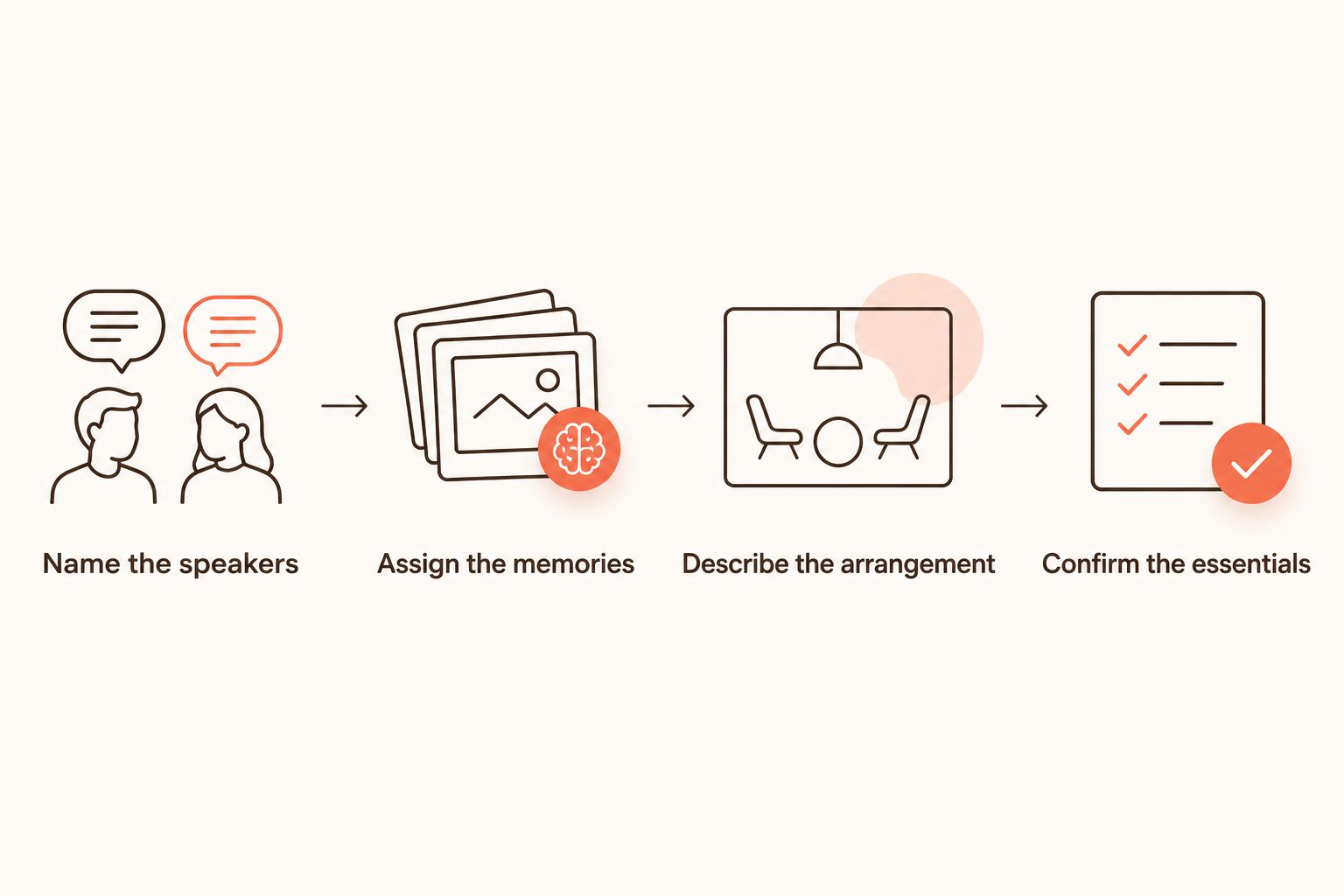
How Do I Request a Duet Without Leaving the Details to Chance?
Start with the relationship and finish with the vocal arrangement. A brief that explains both is more useful than a long list of musical adjectives.
1. Name the speakers
Say who the voices represent. A song from both parents to our daughter is clearer than an emotional male-and-female duet, because the first description establishes the relationship and point of view.
A voice's sound does not automatically determine its role. Be explicit about who is speaking rather than expecting vocal qualities to explain the story.
2. Assign the memories
Separate shared experiences from individual ones. Give each speaker a meaningful detail, then identify the message they both want to express.
Choose details the recipient will recognize. The tiny kitchen, the rainy walk home, or the nickname used only within your family can carry more personal meaning than broad praise.
3. Describe the arrangement
Explain whether you want alternating verses, shared lines, harmony, or a combination. If only the chorus should bring the voices together, say so.
You can also describe what you do not want. For example, explain that the second voice should have a separate verse rather than only supporting the chorus.
4. Confirm the essentials
Before proceeding, ask whether the service supports the voice arrangement, whether you can specify who sings each part, and how changes are handled. If the song is tied to an event, confirm delivery arrangements too.
Distinguish a requirement from a preference. If two distinct lead voices are essential, establish that first rather than assuming the word custom covers it.
Here is an illustrative brief you can adapt, not a promise of a particular service feature:
This is an anniversary gift about our life together. One voice should tell my side of our first meeting, and the other should tell the story my partner has shared about that day. Please bring both voices together for the chorus about choosing each other through ordinary life. Two distinct lead parts matter more to me than background harmony.
Can a Duet Work If the Gift Comes From Only Me?
Yes, a duet can tell a story from one gift-giver, but decide what the second voice represents. It might function as musical support rather than speaking on behalf of the recipient.
If you want the song to sound like a conversation, use shared words or memories your loved one will recognize. Do not turn an imagined response into a claim about how they feel.
For a straightforward love letter, one lead voice with harmony keeps ownership of the message clear. Choose a conversational duet when hearing both perspectives is central to the gift.
Is a Duet a Good Choice for a Memorial Song?
A duet can suit a memorial song when the voices represent living loved ones sharing their memories. Each person can contribute a different part of the relationship while joining in a common message of remembrance.
Be more careful with lyrics written as though the person who died is answering. That framing is a personal choice, not an automatic way to make a tribute more comforting.
Choose the perspective with the recipient's feelings in mind. A song that simply says what you miss and what you carry forward does not need an imagined reply to be meaningful.
Does a Duet Mean Two Real People Recorded the Song?
No. Duet describes how vocal parts interact; it does not establish how a recording was produced or how many performers took part.
If the production method matters to you, ask the service directly how the vocals are created. Likewise, two voices do not imply that you can choose named performers, use a loved one's recording, or request an imitation of a particular singer.
Separate the questions: what should the finished song sound like, and what production approach are you comfortable choosing? Both deserve a clear answer before you commit.
FAQ
Can I request one lower voice and one higher voice?
You can describe that preference, but confirm that the service supports distinct voice choices before proceeding. Also explain which voice should sing each part and whether they should join together.
Can a personalized duet include both our names?
Both names can be written into duet lyrics. Explain who is addressing whom so the names help the listener follow the story rather than making the speaker changes confusing.
Is harmony enough if I want a song from both parents?
Harmony adds vocal support, but it does not automatically establish that both parents are speaking. Use shared wording or clearly assigned parts if the gift should express two individual perspectives.
Can siblings give Mom a duet-style song together?
Siblings can frame a duet-style song around separate memories and a shared message to Mom. Confirm the service's arrangement options, and distinguish each person's memories from experiences everyone shared.
Do I need to record my own singing for a personalized duet?
A duet arrangement does not inherently require your own vocal recording. Ask the service how it creates the vocal parts and whether personal recordings are accepted if you want your voice included.
Does FreeCustomSong create personalized songs with vocals?
Yes, FreeCustomSong creates personalized songs with custom lyrics, music, and vocals. If your gift depends on a duet or another specific vocal arrangement, confirm that requirement before proceeding.
One Last Thing
The most useful duet detail is why the second voice belongs in the song. If removing that voice would remove a memory, a perspective, or a shared promise, you have a clear reason for the arrangement.
Bring us the person, the occasion, and the little details you do not want forgotten. Start creating a personal song around what you want someone you love to hear, and make any essential voice requirements clear from the beginning.